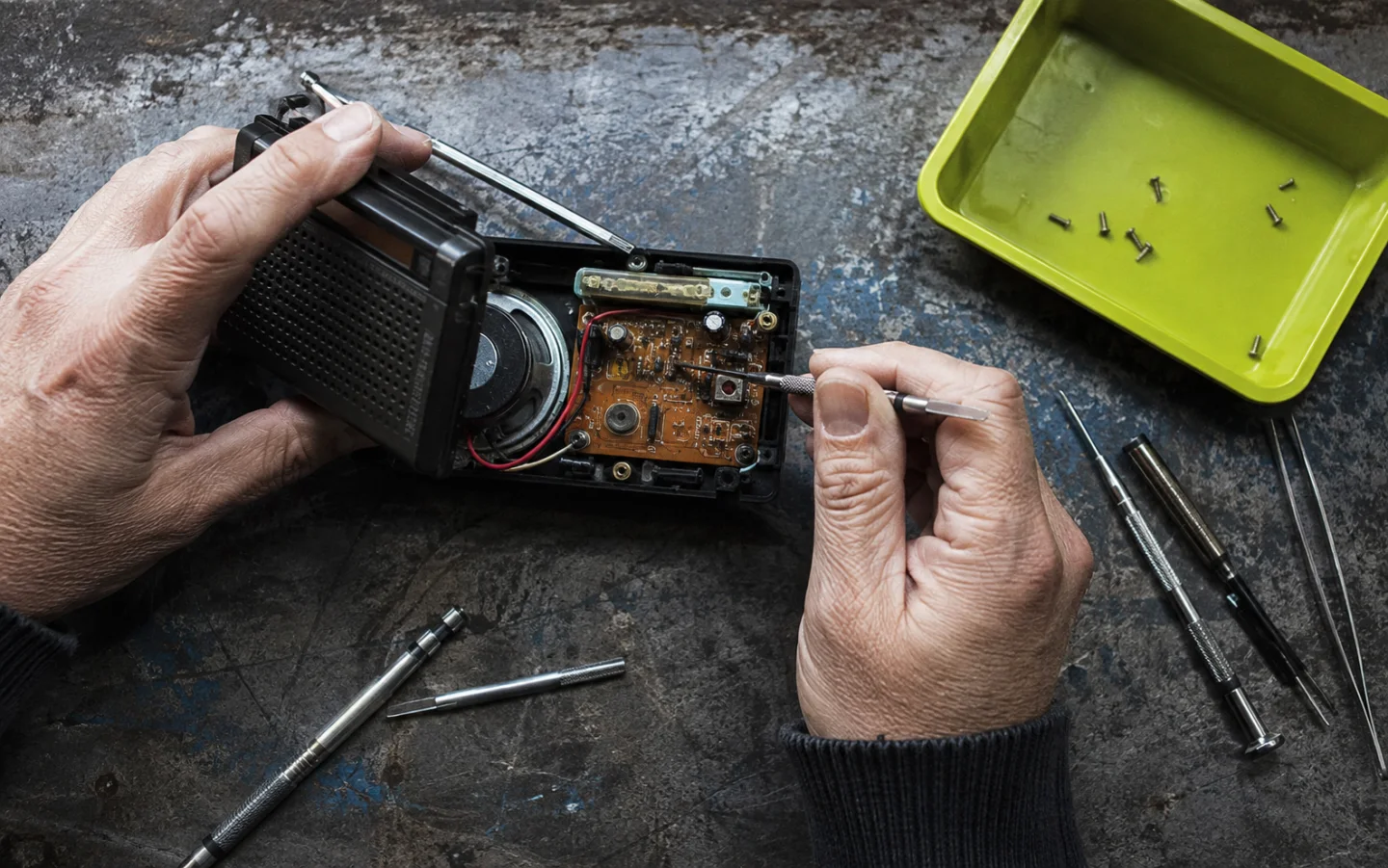
A screw suggests that an object may be opened again. That small possibility changes the relationship between a device and the person who owns it.
Method note: This article combines consumer-policy sources with a cautious pre-purchase inspection. It does not advise opening unsafe or warranty-sensitive equipment.
The invitation inside a seam
Older radios, lamps and cameras often reveal how they are assembled. Their seams are visible, their fasteners are ordinary, and the route from the outer case to the working parts can be followed with patience. The design quietly admits that failure is expected and repair is possible.
Many newer objects present the opposite idea. Glued surfaces and paired components make the device feel complete but temporary. When it stops working, the owner is kept outside the problem and encouraged to replace the whole thing.
Understanding creates attachment
Repair does not have to restore an object perfectly to change its value. Learning which part failed, where a wire runs or how a switch closes a circuit turns the object from a sealed product into a collection of understandable decisions.
That knowledge produces a different kind of care. Scratches become records rather than defects. A slightly crooked replacement knob can carry more meaning than the factory original because it marks the moment the owner chose to continue.
Design for another attempt
Repairable design does not require nostalgia. Standard fasteners, available parts and clear instructions can belong to contemporary products. What matters is that the next person is given a reasonable chance to try.
The result is practical, but it is also cultural. A repairable object teaches that maintenance is normal, materials have consequences, and ownership can include responsibility. It asks us to stay curious after the warranty ends.
Repair barriers are not imaginary
The US Federal Trade Commission documented how specialized tools, unavailable parts and proprietary diagnostic software can restrict independent repair. In the European Union, rules promoting repair now require covered manufacturers to make repair available within a reasonable time and price, while limiting unjustified hardware or software barriers.
These policies do not make every product easy to repair, and rights vary by product and country. They do show that repairability is a measurable consumer issue, not simply a preference for older objects.
A five-minute check before buying
Before purchasing an appliance or device, search for the model number followed by service manual, replacement battery and spare parts. Check whether ordinary screws provide access, whether the battery is replaceable, how long software support is promised and whether a local shop will accept the model.
A high repair score does not automatically make a product good. Reliability, safety and energy use also matter. The useful question is whether a common failure can be fixed at a cost that makes sense compared with replacement.
Know when not to open it
Microwave ovens, mains-powered devices, swollen batteries and equipment containing high-voltage capacitors can remain dangerous after they are unplugged. Water-damaged lithium batteries require particular care. If the risk is unclear, stop and use a qualified technician rather than treating disassembly as a learning exercise.
For safer objects, begin by documenting each step. Photograph cable positions, group screws by stage and avoid forcing clips you do not understand. The goal of a first repair is not speed. It is to preserve the option of putting the object back together.